FuelEU Maritime Compliance
FuelEU Maritime sets binding GHG intensity targets for vessels operating in EU waters from 2025. SEACOTEC helps you monitor, manage and meet your obligations — every year.

What is FuelEU Maritime?
FuelEU Maritime (Regulation EU 2023/1805) applies from 1 January 2025. It sets annual GHG intensity limits for the energy used onboard ships of 5,000 GT and above calling at EU ports — progressively tightening through to 2050.
GHG intensity targets
2025: −2%. 2030: −6%. 2035: −14.5%. Targets escalate steeply toward 2050 (−80%).
Renewable fuels incentives
Use of renewable fuels of non-biological origin reduces your effective GHG intensity.
Pooling mechanism
Ships with surplus compliance can pool with non-compliant vessels, providing flexibility and commercial opportunity.
Non-compliance penalties
Failure to meet FuelEU requirements results in fines of €2400 per per excess tonne of VLSFO-equivalent, plus potential port bans.
How SEACOTEC Supports Your FuelEU Compliance
We manage the full FuelEU compliance cycle — from monitoring plan setup to annual statement delivery and balance optimization.
Monitoring Plan
FuelEU Monitoring Plan preparation and coordination of verifier's approval.
Data Collection
All relevant fuel data collected and well-to-wake emission factors assigned per voyage.
GHG Intensity Calculation
Voyage-level and vessel-level GHG intensity calculated against FuelEU targets.
FuelEU Statements
FuelEU compliance statements generated via SEACOSCORE to facilitate contractual agreements.
Balance Management
Surplus and deficit balance tracking and optimization across your fleet via SEACOPOOL.
Pooling Support
Pooling agreement facilitation — identifying partners with complementary balances.
Fleet Dashboard
Real-time fleet-wide GHG intensity monitoring and compliance status via SEACOSCORE.
Alternative Fuels Advisory
Strategic advice on alternative and low-carbon fuels to reduce long-term GHG intensity.
Our Digital Tools for FuelEU Maritime
SEACOSTAR gives your team a real-time FuelEU dashboard — track GHG intensity, manage balances and model scenarios before the year-end deadline.
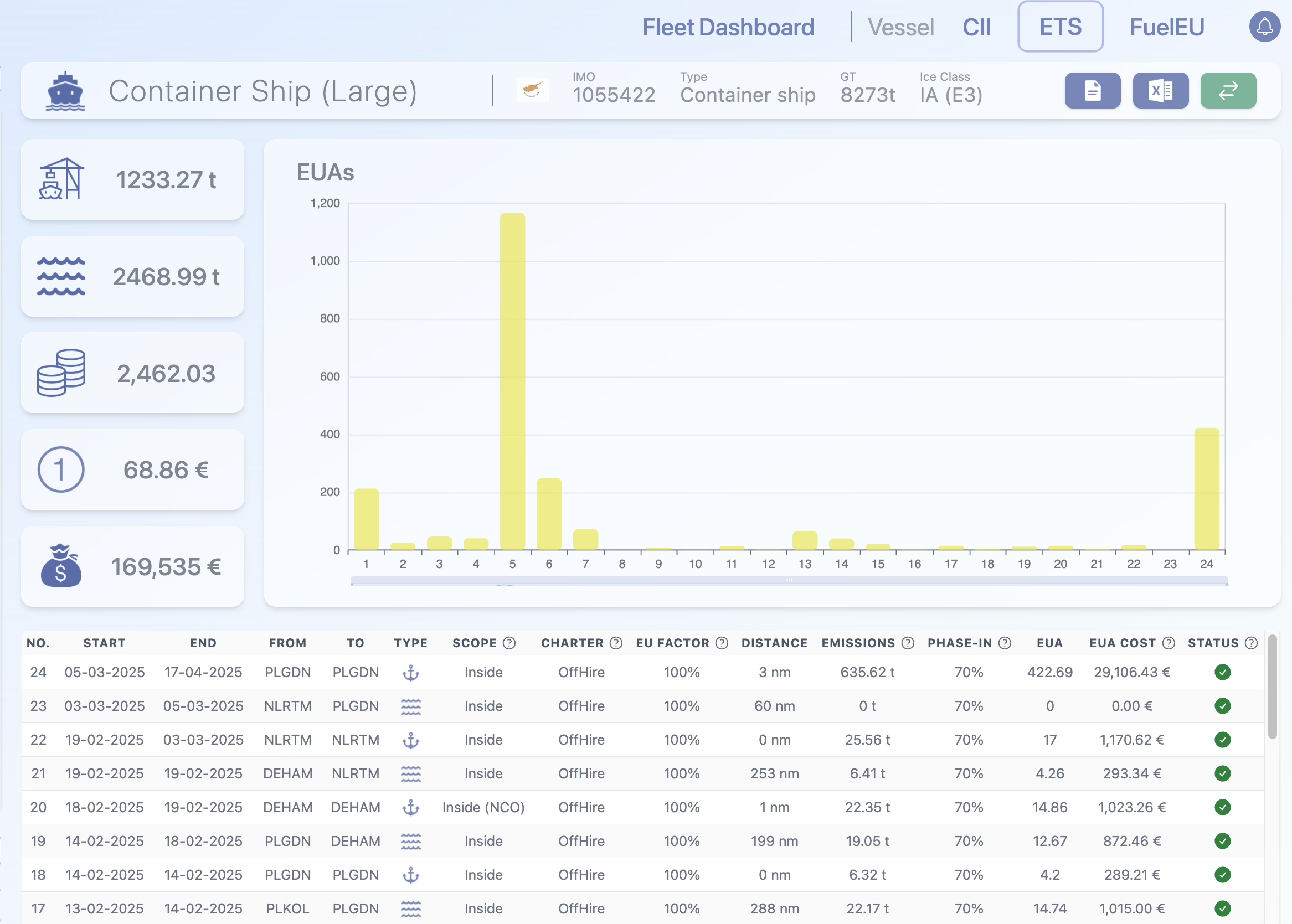 SEACOLLECT
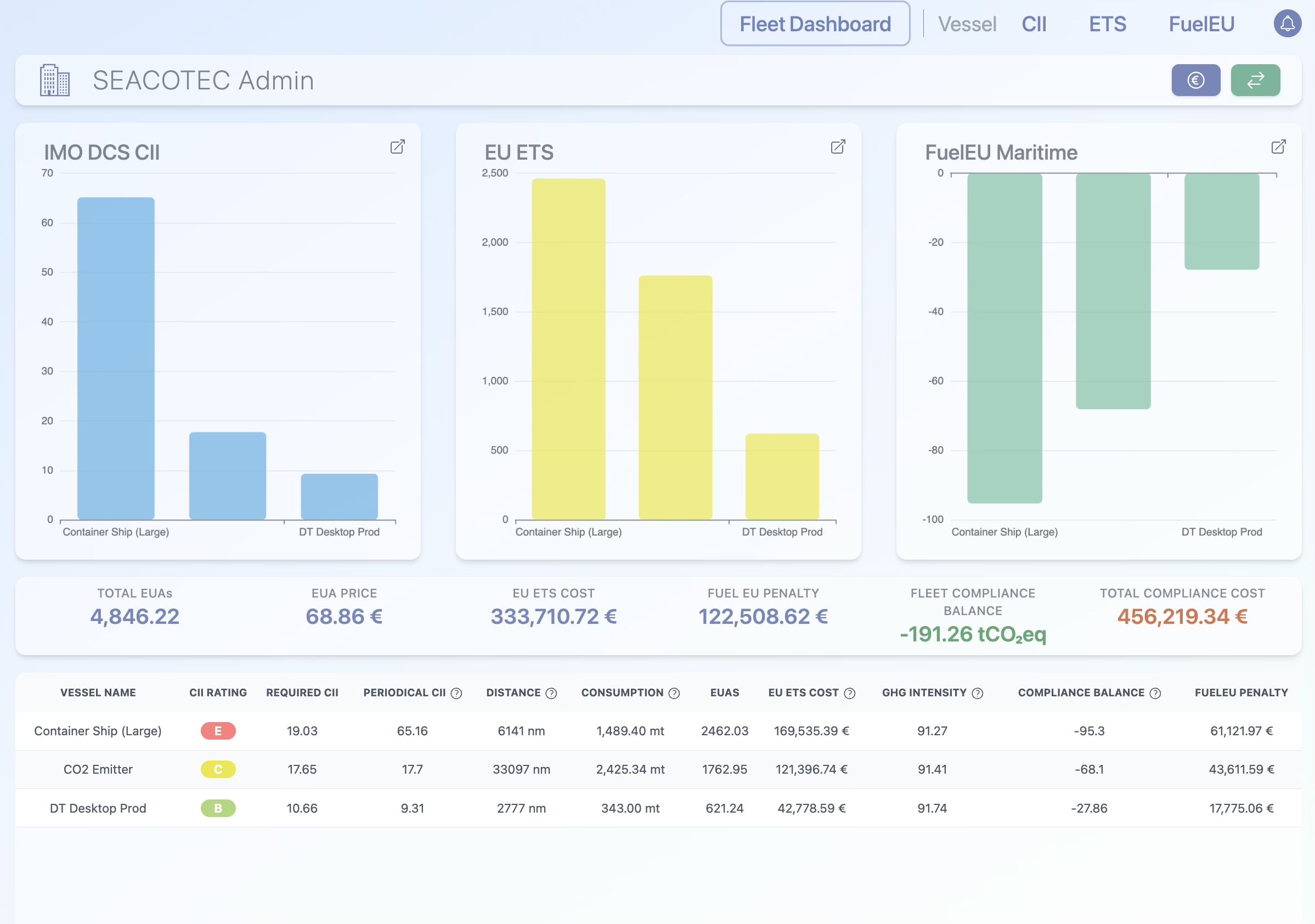 SEACOSCORE
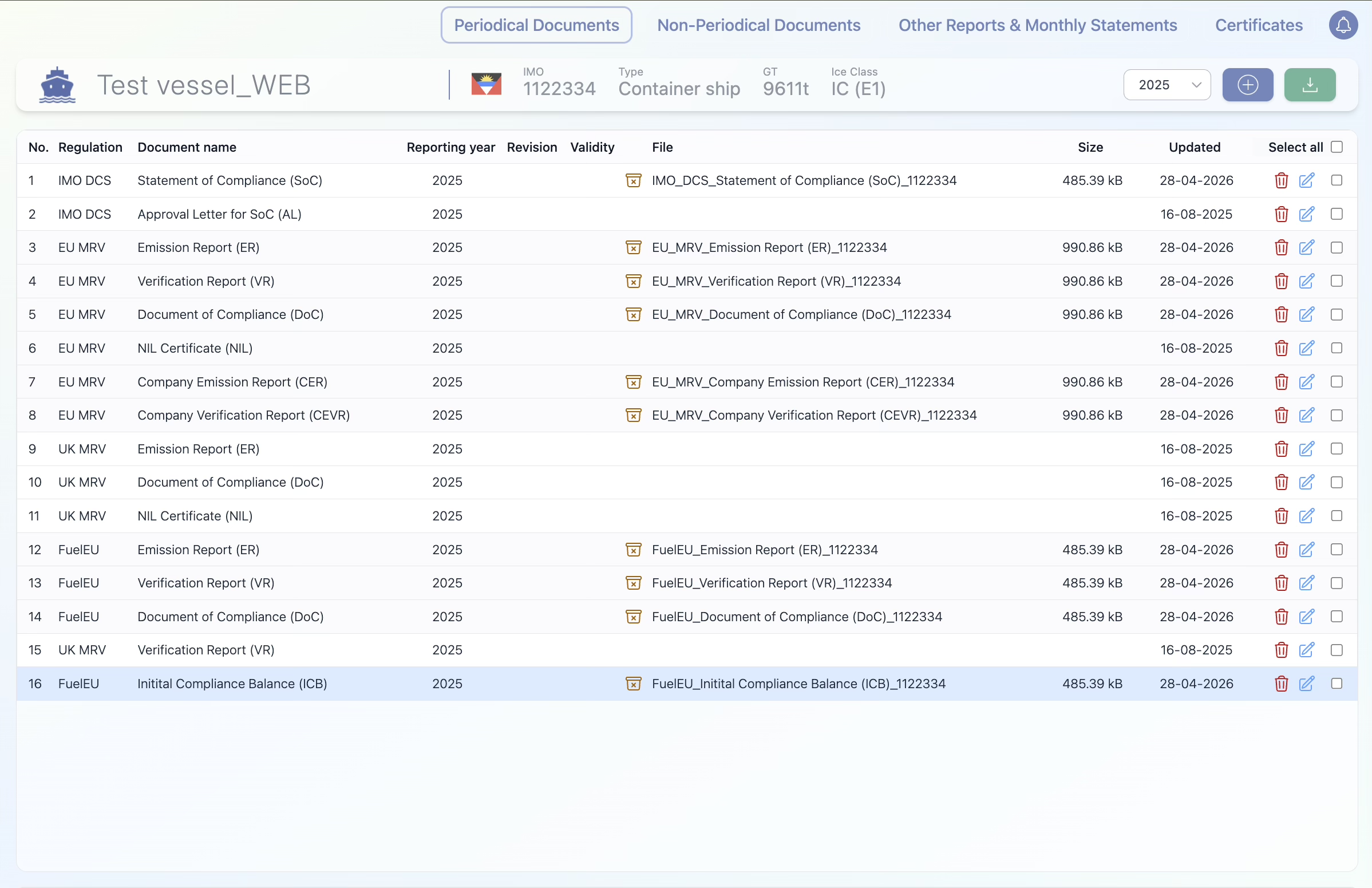 SEACODOCK
FuelEU Maritime — Frequently Asked Questions
FuelEU Maritime is an EU regulation that sets limits on the greenhouse gas (GHG) intensity of energy used by ships of 5,000 GT and above. It entered into force on 1 January 2025, with GHG intensity targets tightening every 5 years through to 2050.
Ships of 5,000 GT and above calling at EU ports are covered. The regulation applies to 100% of energy used on voyages between EU ports and 50% of energy on voyages from/to non-EU ports, as well as energy used at berth in EU ports. It is worth noting, that unline EU ETS, Iceland and Norway are not covered by FuelEU Maritime
FuelEU sets a 2% reduction in GHG intensity vs 2020 baseline from 2025, rising to 6% by 2030, 14.5% by 2035, and 80% by 2050. These apply to the well-to-wake lifecycle emissions of all energy sources used onboard.
Pooling allows shipping companies to balance compliance across their fleet or with other companies. A vessel with a surplus can share it with an under-performing vessel within the same pool. SEACOTEC can help you identify pooling opportunities and manage the process.
Non-compliant vessels face a FuelEU penalty calculated as: surplus [MJ] × 2.44 × €40/GJ. Additionally, vessels with two or more consecutive years of non-compliance can be expelled from EU ports until compliance is demonstrated.
Both regulations run in parallel. EU ETS requires surrendering allowances for CO₂ emissions, while FuelEU governs the GHG intensity of fuel. Using low-carbon fuels can reduce your EU ETS costs and help meet FuelEU targets simultaneously — SEACOSTAR models both obligations together.
Get ahead of FuelEU Maritime today
The earlier you start monitoring, the more flexibility you have. Talk to our experts and set up your FuelEU compliance process now.